
Two days of insights, case studies, and strategies for building AI-ready, data-centric enterprises
The 2025 Enterprise Data Transformation Symposium (EDTS) brought together leading practitioners, technologists, and business leaders for a two-day virtual event exploring the future of data-centric architectures, semantic technologies, and AI integration. Over the course of 13 sessions, attendees gained both strategic vision and hands-on practices for transforming siloed enterprise data into intelligent, reusable, and AI-ready assets.
Featured Sessions & Speakers
Building Data-Centric Foundations

Stratos Kontopoulos (Foodpair) — Harnessing Knowledge Graphs for Data-Centric Architecture
Showed how enterprises can move beyond application silos by using knowledge graphs as the backbone of integration.
Semantic Arts Team — Dylan Abney, Peter Winstanley, Pel Olsen — Upper Ontologies: Their Origins, Characteristics, and an Introduction to gist
Introduced gist, an upper ontology designed to simplify modeling and provide a consistent semantic layer.
Rebecca Younes, Michael Uschold, Phil Blackwood (Semantic Arts) — Developing Data-Centric Architecture Using gist
Demonstrated practical methods for implementing data-centric architecture, governance, and change management.
Standardization & Governance

AstraZeneca — Data Dictionaries: The Missing Piece in the Data Standardization Puzzle
Highlighted how data dictionaries drive consistency, compliance, and automation across the clinical lifecycle.

Patrick Park & Wilson Carey (Payzer) — Benefits of Semantic Technology: The Payzer Case Study
A real-world example of using semantics to unify product, customer, and financial data—improving integration speed and reducing costs.
Panel Discussion — Robert Long (Apptad), Marina Aguado (EU Agency for Railways), Dave McComb (Semantic Arts)
Shared lessons from harmonizing heterogeneous data sources in regulated and legacy environments.
Semantic + AI Synergy

Thomas Hubauer (Siemens) — Knowledge-Based Generative AI at Siemens
Demonstrated how knowledge graphs ground generative AI in trusted data for safer, more explainable applications.

Fireside Chat with Tony Seale, “The Knowledge Graph Guy” — LLM and Data Products: Where Are We Headed Next?
Explored the intersection of LLMs and data products, including governance, scalability, and retrieval-augmented generation (RAG).

Jay Yu (RelationalAI) — Elevating Enterprise Apps to Intelligent Data Apps via Knowledge Graphs
Showed how enterprise applications can evolve into adaptive, AI-driven systems through relational-graph hybrids.

Robert Long (Apptad) — Architecting for Natural Human-AI Interactions
Focused on designing AI that communicates naturally, with semantics and context supporting trustworthy interactions.
Domain Applications

Alexander Garcia (Siemens Energy) — From FAIR to the Mesh: Delivering Value Through the Digital Continuum
Connected FAIR data principles with the data mesh paradigm, showing how semantic products deliver value across Siemens Energy.

Beatrice Gamba (WordLift) — Transforming Online Business for the AI Era: The Role of Knowledge Graphs
Demonstrated how knowledge graphs enhance SEO and prepare online businesses for AI-driven search and discovery.
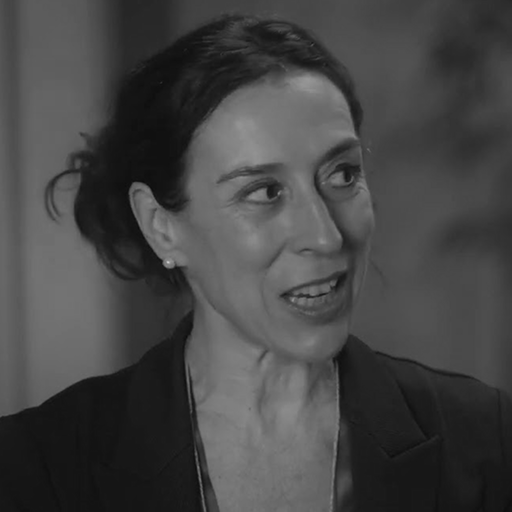
Marina Aguado (EU Agency for Railways) — The Rail Path Towards Data Centricity: From Legal Text to Machine-Consumable
Showed how legal and regulatory documents can be transformed into structured, machine-readable data to improve compliance and automation.
Key Themes That Emerged
- Data-Centric Foundations — Ontologies and data dictionaries provide the backbone for scalable, interoperable enterprise systems.
- Standardization & Governance — Harmonizing data reduces cost, risk, and integration complexity while improving automation.
- AI & Semantics Together — Knowledge graphs provide the missing context and grounding that make generative AI enterprise-ready.
- Cross-Industry Proof — Pharma, railways, industrial manufacturing, SaaS, and digital marketing all showcased working, transferable models.
- Practical Adoption Playbooks — From SemOps pipelines to ontology roadmaps, attendees walked away with patterns they could immediately apply.

What Attendees Took Away
- A blueprint for transformation: start with shared models and data contracts, layer on semantics, and prepare for AI.
- Confidence in AI integration: how to deploy LLMs and generative AI safely using trusted enterprise data.
- Practical case studies: repeatable lessons from AstraZeneca, Siemens, Payzer, and WordLift.
- Cross-industry relevance: clear evidence that semantic approaches scale across regulated, technical, and digital sectors.
- Actionable roadmaps: a 90-day plan to pilot semantics and build momentum toward data-centric architecture.
Closing
The 2025 EDTS made it clear: the future of enterprise is not application-centric, but data-centric, semantic, and AI-augmented. By starting with strong ontologies, embracing FAIR principles, and grounding AI in trusted data, organizations can unlock resilience, agility, and intelligence at scale.