
From Silos to Semantics: EDTS 2024 Highlights the Future of AI-Ready Enterprises
The 2024 Enterprise Data Transformation Symposium (EDTS) convened global leaders in data-centric architecture, AI, and knowledge graphs for a two-day webinar packed with case studies, strategies, and forward-looking discussions. The event featured 13 sessions from practitioners across pharma, media, retail, automotive, healthcare, real estate, and consulting. Together, these sessions painted a clear picture of how organizations can shift from siloed systems to data-centric, AI-ready enterprises.
Featured Sessions & Speakers

Mike Atkin — Business Case for Data-Centric
A longtime champion of semantics, Atkin made the case for why data-centric architecture is not just technical, but economic. He quantified the hidden costs of app-centric systems and showed how data-centric approaches reduce complexity, improve compliance, and accelerate business agility.

Philippe Hoij (DFRNT) — Using Knowledge Graph Recursion
Hoij unpacked the power of recursion in knowledge graphs, showing how iterative relationships and graph reasoning can model complex domains more naturally than relational systems.

Sergey Fogelson (TelevisaUnivision) — Business Case for a Harmonized Data Architecture to Secure a New Revenue Stream
Fogelson demonstrated how harmonized data structures enabled media monetization opportunities, such as targeted advertising and cross-platform analytics. His talk was a blueprint for turning better data into direct revenue streams.

Ravi Bajracharya (Datum.med) — Leveraging Knowledge Graphs to Speed Clinical Decision Support
Bajracharya shared how knowledge graphs improve health data interoperability and accelerate clinical decision support. The talk highlighted AI’s role in linking medical ontologies, patient data, and evidence-based guidance.

Nayan Paul (Accenture) — How Data and AI Strategy Needs to Evolve to Implement GenAI Applications
Paul explored the intersection of enterprise data strategy and generative AI, stressing the importance of grounding LLMs in trusted enterprise semantics for safe, explainable outcomes.

Jan Aasman (Franz), Dean Allemang, Brian Platz (Fluree) — The Interplay Between KGs and LLMs
A fireside-style discussion on how knowledge graphs and LLMs complement each other. The panel outlined architectures for retrieval-augmented generation (RAG), governance, and traceability.

Martin Romacker (Roche Pharmaceuticals) — Extending FAIR Principles Beyond R&D with Data Centricity
Romacker described Roche’s efforts to expand FAIR principles (Findable, Accessible, Interoperable, Reusable) across the enterprise. The message: FAIR is not just for science, but for the business as a whole.

Katariina Kari (Inter IKEA Systems BV) — Data-Centric Product Recommendations at IKEA
Kari presented how IKEA leverages data-centric design for personalized product recommendations, showing how semantics fuel a more adaptive customer experience.

Stratos Kontopoulos (Foodpairing) — How the Foodpairing Knowledge Graph is Revolutionizing Food Product Development
Kontopoulos demonstrated how a knowledge graph models taste, ingredients, and preferences, enabling innovative product development in the food industry.
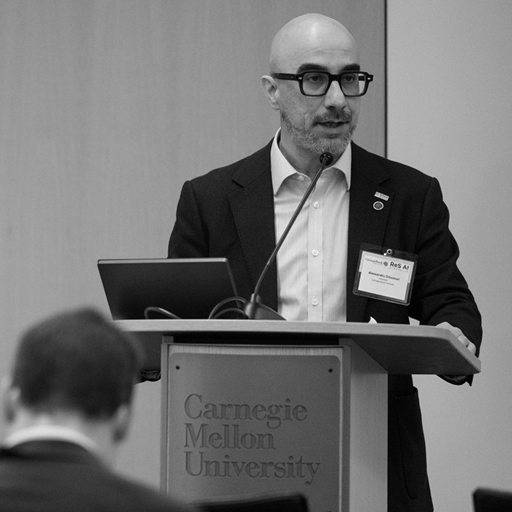
Alessandro Oltramari (Bosch) — Assisting the Technical Workforce with Neuro-Symbolic AI
Oltramari explored neuro-symbolic AI, combining machine learning with symbolic reasoning to assist Bosch’s technical workforce. His examples showed AI as a partner in diagnostics, design, and operations.

Tavi Truman (RocketUrBiz) — Revolutionizing Real Estate with Semantic Integration and AI-Driven Workflows
Truman shared how semantic integration transforms real estate operations, enabling smarter property workflows, valuations, and customer journeys powered by AI.

Ben Gardner (AstraZeneca) — R&D Data Office Approach to FAIR Data-Centric Information Architecture
Gardner presented AstraZeneca’s R&D data office strategy, a practical case of implementing FAIR principles at enterprise scale. His talk focused on governance, architecture, and cultural adoption.
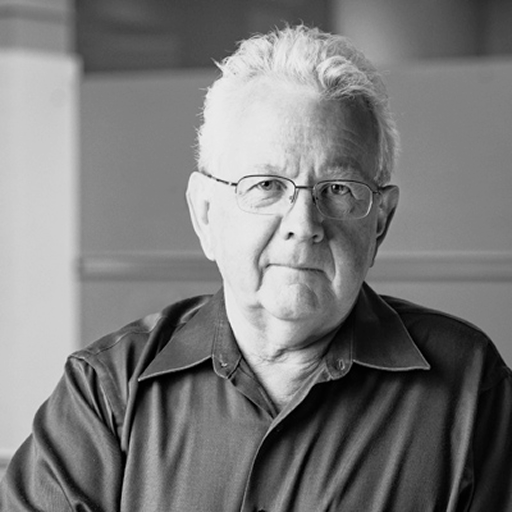
Dave McComb (Semantic Arts) — Closing Statements
McComb tied together the threads of the symposium: start with shared meaning, structure your data for reuse, and build governance for sustainable transformation.
Key Themes That Emerged
- The Business Case for Data-Centricity — ROI and revenue impact were front and center, with speakers demonstrating how harmonized, data-centric architectures reduce integration costs, mitigate compliance risk, and open new revenue streams.
- FAIR as an Enterprise Standard — FAIR (Findable, Accessible, Interoperable, Reusable) principles moved beyond R&D into whole-enterprise adoption, proving to be not just a compliance framework but a competitive differentiator.
- AI & Knowledge Graph Synergy — Knowledge graphs and semantics emerged as the essential grounding for generative AI, enabling explainability, trust, and safe enterprise-scale deployments.
- Cross-Industry Proof — Real-world case studies from pharma, healthcare, retail, food science, real estate, and media illustrated how data-centric practices can be applied across diverse industries with tangible results.
- Scalable Practices & Playbooks — Techniques like recursion in knowledge graphs, semantic governance, and operational SemOps pipelines gave attendees actionable patterns to scale their data-centric initiatives.

What Attendees Took Away
Participants left with:
- A clear economic justification for data-centric transformation.
- Blueprints for FAIR adoption across industries.
- Confidence in AI alignment through semantics and KGs.
- Concrete case studies proving impact in pharma, retail, media, real estate, and more.
- A roadmap for change, from theory to operational SemOps.
Closing
2024 Enterprise Data Transformation Symposium demonstrated that the convergence of FAIR data, knowledge graphs, and AI is not experimental—it’s the new enterprise operating model.